
What Changed for Importers Under the Law Approved in July 2026?
The "What's Good for the U.S." reform was enshrined in the Standards Law (Amendment No. 21), 5786-2026, published on 22.7.2026. The law introduces an American track: an importer or manufacturer may import and sell a product subject to an official standard if it complies with the adopted U.S. federal regulation, instead of the Israeli standard. The track applies only to products manufactured in the U.S. or in Israel, and according to the text of the law, it takes effect on 22.1.2027.
Get an Initial Legal Consultation
Leave your details and one of our attorneys will get back to you today.
Key Facts
The Law: Standards Law (Amendment No. 21), 5786-2026, Book of Laws 3566.
Publication: 22.7.2026.
Start of the American track: 22.1.2027.
Who it applies to: A business operator that elects to use the American track. The existing tracks remain in place.
Origin requirement: The product was manufactured in the U.S. or in Israel, and the importer holds a declaration invoice under the Israel–U.S. Free Trade Area Agreement.
Does not apply to: Food, motor vehicles, and products subject to an official fire-safety standard (with exceptions such as standalone smoke detectors).
Sanction: Financial penalties for violations to be prescribed by the Minister in the Ninth Schedule to the Law.
What Changed and When
The law was approved in July 2026, but the track itself opens only in January 2027. Timeline:
3.10.2025: Government Resolution 3386, "Facilitating Imports from the United States."
12.1.2026: The bill was published (Government Bills 1922).
2.2.2026: Approval on first reading.
June 2026: Economics Committee deliberations ahead of the second and third readings.
July 2026: Final approval by the Knesset, and publication in the Official Gazette on 22.7.2026.
22.1.2027: Commencement of the chapter on adoption of U.S. federal regulation.
Which Products Are Included in the First Phase
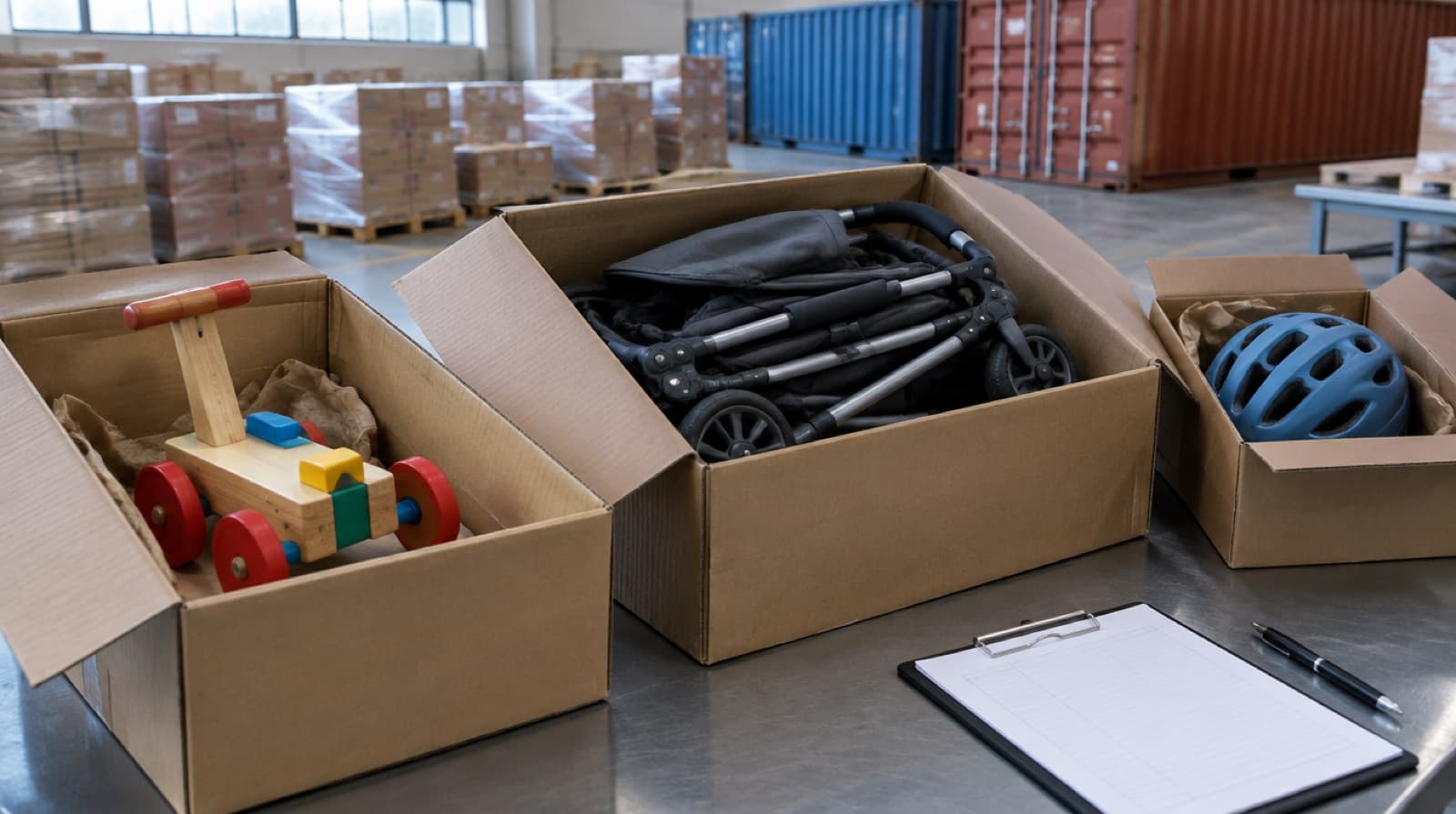
The list is set out in the Eighth Schedule to the Law, by chapters of the U.S. Code of Federal Regulations (CFR). Title 16 covers children's and infant products (toys, pacifiers, bottles, cribs, strollers, bicycles, and more), cleaning agents and hazardous substances sold to the public, as well as bicycle helmets, mattresses, textile carpets, and lighters. Title 21 covers plastics, ceramics, and glass that come into contact with food, high chairs for children, and sunglasses and metal frames. Title 49 covers vehicle restraint devices.
Some products are subject to additional conditions. Toys for children under age 3, pacifiers, bottles, and feeding accessories enter the track only if the business operator holds a Children's Product Certificate (CPC). For cleaning agents, technical documentation is required in accordance with the guidelines of the Commissioner of Standardization, and where a "Poison Center" label is required, the Israel National Poison Information Center at Rambam must be indicated instead.
Who It Applies to and Who It Doesn't
The American track is open to any business operator that elects to use it, but only for products manufactured in the U.S. or in Israel.
A product of an American company that is manufactured in a third country does not meet the requirement, even if it is sold in the U.S. and fully complies with all requirements there. The law requires a declaration invoice under the Israel–U.S. Agreement, or another document to be prescribed by the Minister by order. This is the same question of rules of origin and trade agreements that arises in customs clearance of goods, and it is therefore advisable to verify this with the supplier before placing an order.
The track does not override Israeli law. The product must be labeled in accordance with Israeli law, and any electrical appliance or equipment must also comply with the Electricity Law, 5714-1954. The Israeli track and the European track remain in place, and a business operator that has not elected the American track continues to operate as before.
What to Check Now
Anyone importing from the U.S. can start preparing now, ahead of January 2027:
Map out the products you import from the U.S. that are subject to an official standard, and check whether they appear in the Eighth Schedule.
Confirm with the supplier where each model is actually manufactured, and request a declaration invoice under the Free Trade Agreement.
For early-childhood toys, pacifiers, and bottles: request a CPC for each model.
For cleaning agents: prepare technical documentation and Hebrew labels with the details of the Israel National Poison Information Center.
For electrical products: verify compatibility with the Israeli power grid and with the Electricity Law.
Before placing an order due to arrive in January 2027, check the Ministry of Economy website to confirm that the date and the list have not changed. The binding text of the regulation is in English, and a Hebrew translation is expected to be published there.
Questions of this kind are handled as part of our customs and import law advisory services. This area is handled at the firm by Adv. Udi Asa, who worked from 2011 to 2022 in the Legal Department of the Customs and VAT Division at the Israel Tax Authority headquarters.